
Is your patio heater looking dull or not working as well as it used to? Keeping your patio heater clean is key to making sure it stays safe and runs smoothly all season long.
You might think cleaning it is tricky or time-consuming, but with the right steps, you can do it quickly and easily. In this guide, you’ll discover simple tips to clean your patio heater like a pro. Ready to bring back that warm, cozy glow to your outdoor space?
Let’s get started!
Gather Cleaning Supplies
Gathering the right supplies makes cleaning your patio heater easier and faster. It helps protect the heater and keeps it working well. Prepare everything before you start to avoid interruptions.
Soft Cloth Or Sponge
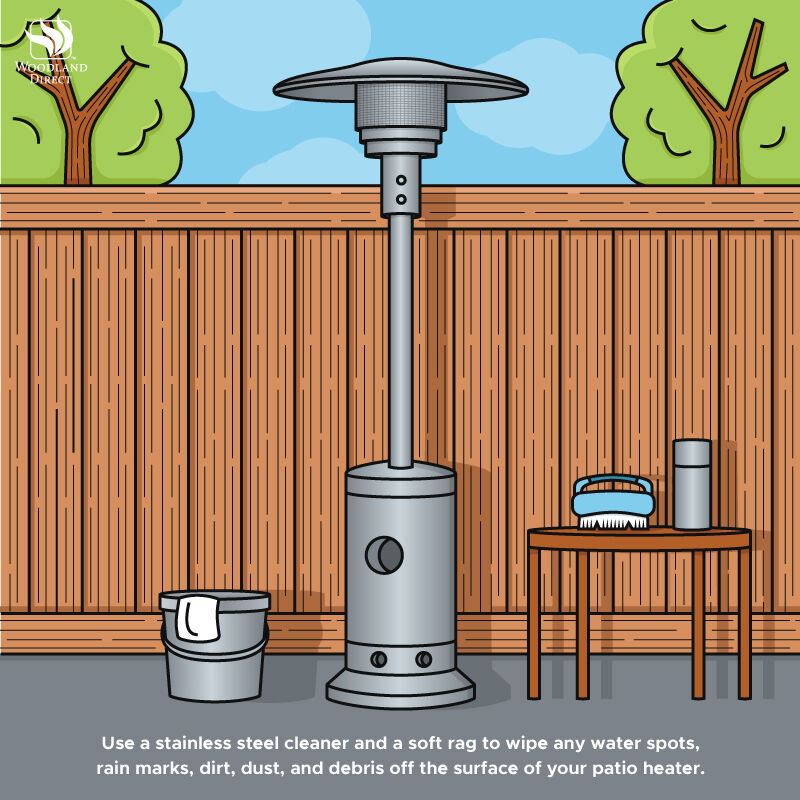
Use a soft cloth or sponge to wipe dirt and dust. Avoid rough materials that can scratch the surface. A damp cloth works best for gentle cleaning.
Mild Soap Or Detergent
Select mild soap or detergent to clean grease and stains. Strong chemicals can damage the heater’s finish. Mix soap with warm water for effective cleaning.
Bucket Of Warm Water
Keep a bucket of warm water ready to rinse the cloth or sponge. Warm water helps remove soap and dirt easily. Change the water if it gets too dirty.
Soft Brush
A soft brush helps clean hard-to-reach areas and grills. Choose one with gentle bristles to avoid damage. Use it carefully to remove stubborn dirt.
Protective Gloves
Wear gloves to protect your hands from dirt and cleaning agents. Gloves also prevent skin irritation. Use reusable or disposable gloves based on your preference.
Vacuum Cleaner With Brush Attachment
A vacuum cleaner with a brush attachment removes dust from vents and crevices. This tool helps keep the heater clean without scratching. Use it before wiping the heater.

Credit: www.patioheatandshade.com
Turn Off And Cool Down Heater
Turning off your patio heater and letting it cool down is the first step in cleaning. This step is very important for your safety and the heater’s care. A hot heater can cause burns or damage cleaning tools.
Patience pays off. Wait until the heater is fully cool before you start cleaning. This can take 30 minutes or more depending on the heater type.
Turn Off The Heater Properly
Switch off the heater using its main power button or gas valve. Ensure the flame or heat source is completely out. Double-check the controls to confirm the heater is off.
Wait For The Heater To Cool Down
Do not rush this step. Touch the heater only when it feels cool to the skin. Avoid cleaning while the heater is still warm to prevent injuries.
Check For Residual Heat
Feel around the heater surface for any leftover heat. Use your hand carefully near metal parts. If you feel warmth, give it more time to cool.
Remove Debris And Dust
Removing debris and dust is the first step to cleaning a patio heater. Dust and dirt can build up over time. This buildup can block the heater’s parts. It lowers the heater’s performance and can cause damage.
Cleaning these particles keeps your heater working well. It also helps it last longer. Taking time to clear dust and debris is important. Here is how to do it safely and effectively.
Always turn off the heater before cleaning. Let it cool completely. Hot parts can cause burns. Wait at least 30 minutes to be safe.
Use A Soft Brush To Remove Loose Dust
Choose a soft brush or a dry cloth. Gently brush the heater’s surface. Focus on vents, grills, and burner areas. This removes loose dust without scratching.
Vacuum Hard-to-reach Spots
Use a vacuum with a brush attachment. Clean inside vents and narrow spaces. This clears hidden dirt and small debris. Be gentle to avoid damage.
Wipe Surfaces With A Damp Cloth
Lightly dampen a cloth with water. Wipe the outside parts of the heater. This removes stubborn dust and dirt. Avoid soaking any electrical parts.
Clean The Exterior Surfaces
Cleaning the exterior surfaces of your patio heater helps keep it looking good and working well. Dirt, dust, and grease can build up over time. Removing these particles protects the metal and paint. A clean heater also lasts longer and stays safer to use.
Use Mild Soap Solution
Start with a mild soap solution for cleaning. Mix a small amount of gentle dish soap with warm water. Avoid harsh chemicals that can damage the surface. This simple mix breaks down dirt and grime easily. Use just enough to make suds but not too much soap.
Wipe Down With Soft Cloth
Dip a soft cloth into the soap solution. Wring out the cloth to avoid dripping water. Gently wipe all exterior parts of the heater. Focus on spots with visible dirt or stains. Rinse the cloth often to keep it clean. After wiping, use a dry cloth to remove moisture. This step prevents rust and water marks.
Clean The Burner And Pilot Area
Cleaning the burner and pilot area of your patio heater is important. This part controls the flame and heat output. Dirt or blockages here can stop the heater from working well. Regular cleaning keeps the heater safe and efficient.
Check For Blockages
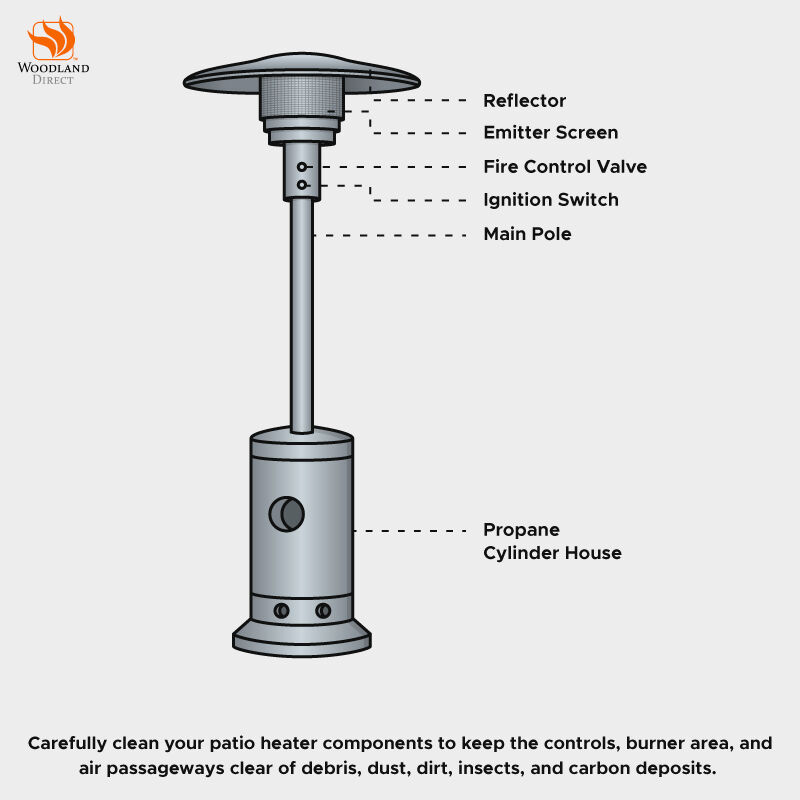
Look closely at the burner and pilot area. Dust, spider webs, or debris can block small holes. These blockages stop gas flow and cause weak flames or no flame. Use a flashlight to spot any dirt or buildup. Clear out anything that looks like it blocks air or gas.
Use Compressed Air Or Brush
Use compressed air to blow away dirt from tiny burner holes. Hold the can upright and spray gently. A soft brush also works to clean dirt and dust. Avoid hard scrubbing that can damage parts. Clean until the burner and pilot look clear and free of debris.
Credit: www.woodlanddirect.com
Inspect And Clean The Reflector
The reflector is a key part of your patio heater. It helps spread the heat evenly. Dirt and dust can build up on it over time. This can reduce how well your heater works. Cleaning the reflector keeps your heater running strong.
Checking the reflector regularly also helps spot damage early. A clean reflector looks shiny and smooth. A dirty one looks dull or spotted. Follow these steps to inspect and clean your patio heater’s reflector safely.
Prepare Your Patio Heater For Cleaning
Turn off the heater and let it cool completely. Disconnect the power or gas supply. This step keeps you safe during cleaning. Place the heater in a well-lit area. This makes it easier to see dirt and damage.
Inspect The Reflector For Damage
Look closely at the reflector surface. Check for cracks, dents, or rust spots. Small damage can affect how heat spreads. Take note of any issues you find. If damage is severe, replacement might be needed.
Remove Dust And Dirt From The Reflector
Use a soft cloth or brush to remove dust. Avoid abrasive tools that can scratch the surface. For stubborn dirt, use mild soap and water. Wipe gently and dry with a clean cloth. Keeping the reflector clean improves heat reflection.
Dry And Reassemble Heater
Drying and reassembling your patio heater is a key step after cleaning. It keeps the heater safe and ready to use. Water or moisture left inside can cause rust or damage.
Carefully dry every part before putting the heater back together. Use a soft cloth to wipe all surfaces. Let small parts air dry fully. This prevents trapped moisture.
Follow the reverse order of disassembly to reassemble. Check each part fits securely. Loose pieces can cause the heater to work poorly or become unsafe.
Test the heater after reassembly. Make sure all connections are tight. Turn it on briefly to confirm it works well. This step ensures your heater is clean and safe.
Use A Soft, Dry Cloth
Wipe all parts with a soft cloth. Avoid rough materials that can scratch surfaces. A microfiber cloth works best for drying.
Air Dry Small Components
Place small parts on a towel to dry. Avoid putting them in direct sunlight. Air drying prevents moisture buildup inside.
Check For Moisture Traps
Look inside tubes and crevices for water. Use a dry cloth or paper towel to absorb moisture. Moisture traps can cause rust and damage.
Reassemble Carefully
Put all parts back in the correct order. Tighten screws and bolts firmly but gently. Loose parts reduce heater efficiency and safety.
Test The Heater
Turn on the heater for a short time. Listen for unusual sounds or smells. Confirm it heats evenly and safely before regular use.
Credit: www.woodlanddirect.com
Regular Maintenance Tips
Regular maintenance helps keep your patio heater working well. It also makes the heater last longer. Small tasks done often stop big problems later. Follow these simple tips to keep your heater clean and safe.
Cleaning your patio heater regularly keeps dirt and rust away. It also helps the heater warm your space better. Use gentle tools and mild soap for cleaning. Avoid harsh chemicals that can damage parts.
Cover When Not In Use
Always cover your patio heater when it is not in use. A cover stops dust, dirt, and rain from reaching the heater. It also protects the heater from sun damage. Use a cover made for patio heaters. Make sure the cover fits well and is waterproof. Remove the cover only when you need to use the heater.
Schedule Periodic Deep Cleaning
Set a date every few months to clean your heater deeply. Turn off and unplug the heater first. Remove the cover and clean all parts carefully. Check for rust or damage during cleaning. Use a soft brush to clean vents and burners. Wipe metal surfaces with a damp cloth. Clean inside parts gently to avoid damage. Deep cleaning helps the heater work safely and well.
Conclusion
Cleaning your patio heater keeps it working well and safe. Regular care stops dirt and rust from building up. Use simple tools like brushes and cloths for cleaning. Always check parts for damage or wear during cleaning. A clean heater lasts longer and heats better.
Take a little time to clean it often. Enjoy warm, cozy nights outside without worries. Your heater will thank you with better performance.